
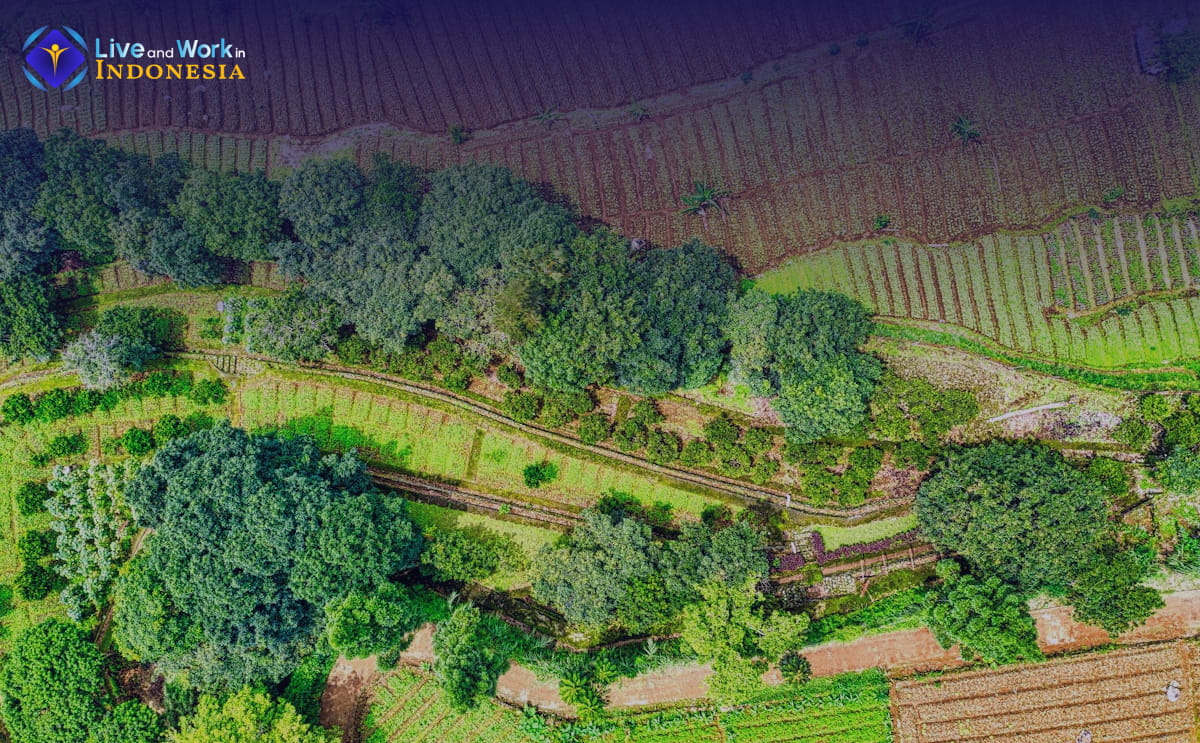
The global food supply chain is facing unprecedented challenges, and by 2026, the international community has turned its focus toward sustainable, resilient food production. In the heart of Southeast Asia, the Indonesian archipelago stands out as an agricultural powerhouse. With its vast fertile volcanic soils, tropical climate, and a government aggressively modernizing its agritech framework, Indonesia has become the premier destination for global agribusiness capital. For international venture capitalists and multinational corporations, launching a Foreign Investment Company in this thriving sector is no longer just a trend it is a critical, high-yield macro strategy.
Navigating the traditional complexities of rural land titles, local farming partnerships, and strict environmental mandates requires precision. In 2026, the Indonesian government has fully integrated agrarian licensing into the Online Single Submission Risk-Based Approach (OSS-RBA) platform. This digital evolution has turned what used to be a bureaucratic maze into a transparent, predictable roadmap. This guide offers an exhaustive analysis of how to establish, run, and scale an agribusiness enterprise under the current regulatory landscape.
1. The 2026 Agrarian Boom: Why Indonesia is Ripe for Investment
The decision to establish a Foreign Investment Company (locally known as a Perseroan Terbatas Penanaman Modal Asing or PT PMA) in the agricultural sector is backed by robust economic indicators.
Modernization and Smart Farming
The Indonesian government’s “Golden Indonesia” roadmap has heavily prioritized digital farming infrastructure. From drone-based crop monitoring in East Kalimantan to automated irrigation networks in Central Java, the country is actively moving away from traditional, labor-intensive farming. This digital transition opens massive opportunities for global tech-driven agritech firms to bring in automated harvesting machinery, genetic research, and localized SaaS dashboards.
The Liberalization of the Positive Investment List
The Positive Investment List (Daftar Positif Investasi) allows for broad foreign ownership across various agricultural sub-sectors. While certain traditional food crops remain protected to safeguard local smallholder farmers, high-value industries like organic cocoa processing, sustainable rubber extraction, large-scale horticulture, and palm oil refining allow for up to 100% foreign equity, eliminating historical “nominee” partnership risks.
2. Structural Requirements for a PT PMA in Agribusiness
To tap into these fertile opportunities, international founders must follow the legal structure of a Foreign Investment Company. This setup is designed to attract high-quality, long-term capital that benefits the local economy and ecosystem.
Minimum Capital Thresholds
The Indonesian government maintains strict capital thresholds for foreign firms to ensure real economic substance.
- The Investment Plan: For any Foreign Investment Company, the total investment plan must exceed IDR 10 billion (excluding land and buildings) per 5-digit business classification (KBLI) code. This covers machinery, processing plants, cold-storage logistics, and intellectual property.
- The Paid-up Capital: At least IDR 2.5 billion must be injected directly into the company’s corporate bank account upon incorporation. These funds act as the immediate working capital to launch operations.
3. Navigating Land Legalities: Understanding the HGU Title
The most critical asset for any agricultural or plantation venture is the land. In Indonesia, foreign individuals cannot personally own freehold land (Hak Milik). Instead, a registered Foreign Investment Company utilizes specific corporate land use rights.
Hak Guna Usaha (Right to Cultivate)
The Hak Guna Usaha (HGU) is the primary legal title used for large-scale agricultural operations.
- Validity: An HGU title is typically granted for an initial period of up to 35 years.
- Renewability: It can be extended for an additional 25 years and subsequently renewed for another 35 years, providing your enterprise with a century of legal security.
- Compliance: To secure an HGU, the company must pass intensive environmental impact assessments (AMDAL) to ensure that the plantation does not encroach on protected rainforests or native conservation zones.
For official historical updates on available state land allocations, zoning laws, and direct investment incentives, you can cross-reference the data provided by the Indonesia Investment Coordinating Board (BKPM).
4. Step-by-Step Registration Workflow through OSS-RBA
Setting up your Foreign Investment Company in 2026 relies on a four-stage digital workflow that bridges corporate creation with environmental licensing.
Phase 1: Name Reservation and Articles of Association
The journey begins at the Ministry of Law and Human Rights. The company name must be reserved using three words in Latin script. Once approved, a licensed Indonesian notary drafts the Deed of Establishment, which details the board of directors, shareholders, and corporate objectives.
Phase 2: NIB and Risk-Based Assessment
The deed is submitted electronically for legal ratification (SK Kemenkumham). Following this, the company registers on the OSS portal to obtain its Nomor Induk Berusaha (NIB). In 2026, because large-scale agriculture involves land use and community impact, it is automatically categorized as a High-Risk Business. Therefore, the NIB acts as an initial registration that unlocks the path to technical inspections rather than an immediate license to operate.
Phase 3: Securing Technical and Environmental Permits
A high-risk business requires direct validation from the Ministry of Agriculture and the Ministry of Environment and Forestry. The company must present its environmental sustainability plan (AMDAL) and secure product-specific standard certifications, such as the Indonesian Sustainable Palm Oil (ISPO) or equivalent sustainable horticulture marks, before clearing land or planting crops.
5. Community Integration and Partnership Models
A successful Foreign Investment Company in the agricultural sector does not operate in isolation; it integrates directly with local farming communities.
The Plasma Scheme (Kemitraan)
The Indonesian plantation law enforces a mandatory community partnership model known as the Kemitraan or Plasma Scheme. Large-scale plantation estates are required to facilitate and develop a minimum of 20% of their total managed land area for the benefit of local community smallholders. This system fosters a symbiotic relationship: the local farmers gain access to your advanced agritech and a guaranteed buyer, while your enterprise secures a reliable, high-yield supply chain.
To handle the intricate web of corporate setup, environmental licensing, and community contract structures without administrative delays, global founders usually seek local expertise. Utilizing the corporate creation and immigration frameworks managed by Live and Work Indonesia guarantees that your corporate entity complies with all local zoning and agrarian codes perfectly.
5 Frequently Asked Questions (FAQ)
1. Can a foreigner own agricultural land directly in Indonesia?
No. Foreign individuals cannot hold a freehold title (Hak Milik). However, a registered Foreign Investment Company (PT PMA) can legally secure a Right to Cultivate (Hak Guna Usaha or HGU) title for up to 95 years through extensions.
2. Is the IDR 10 billion investment plan required immediately?
No. The IDR 10 billion is a realization target to be met as your plantation grows. You report your progress through your quarterly Laporan Kegiatan Penanaman Modal (LKPM). Only the IDR 2.5 billion paid-up capital must be in the corporate bank account initially.
3. What is the role of an AMDAL certificate in agribusiness setup?
The AMDAL is a comprehensive environmental impact assessment. Because agriculture directly impacts soil health, water tables, and local ecosystems, this certificate is mandatory to unlock your permanent business license in the OSS system.
4. Can an agribusiness PT PMA sponsor residency for foreign experts?
Yes. Your company can sponsor an Investor KITAS for its directors and commissioners, as well as specialized Work Visas for foreign agronomists, soil scientists, and technical managers, provided local knowledge transfer plans are in place.
5. What are the consequences of non-compliance with the Plasma Scheme?
Failing to allocate the mandatory 20% partnership land for local community smallholders can result in administrative warnings, fines, and ultimately the revocation of your HGU land title and business registration.
Conclusion: Planting the Seeds of Global Agribusiness
Launching a Foreign Investment Company in Indonesia’s agricultural and plantation sector in 2026 is a masterstroke for forward-thinking investors. While the corporate barrier to entry requires meticulous navigation from securing long-term HGU titles to passing intensive environmental audits the digitized OSS-RBA system has brought absolute clarity to the investment journey.
By embedding corporate transparency, advanced technology, and community integration into your business model, you transform a cross-border expansion into a sustainable, scalable agricultural legacy. The soil is fertile, the digital framework is open, and your vision is the final ingredient needed to lead the future of sustainable food production.













