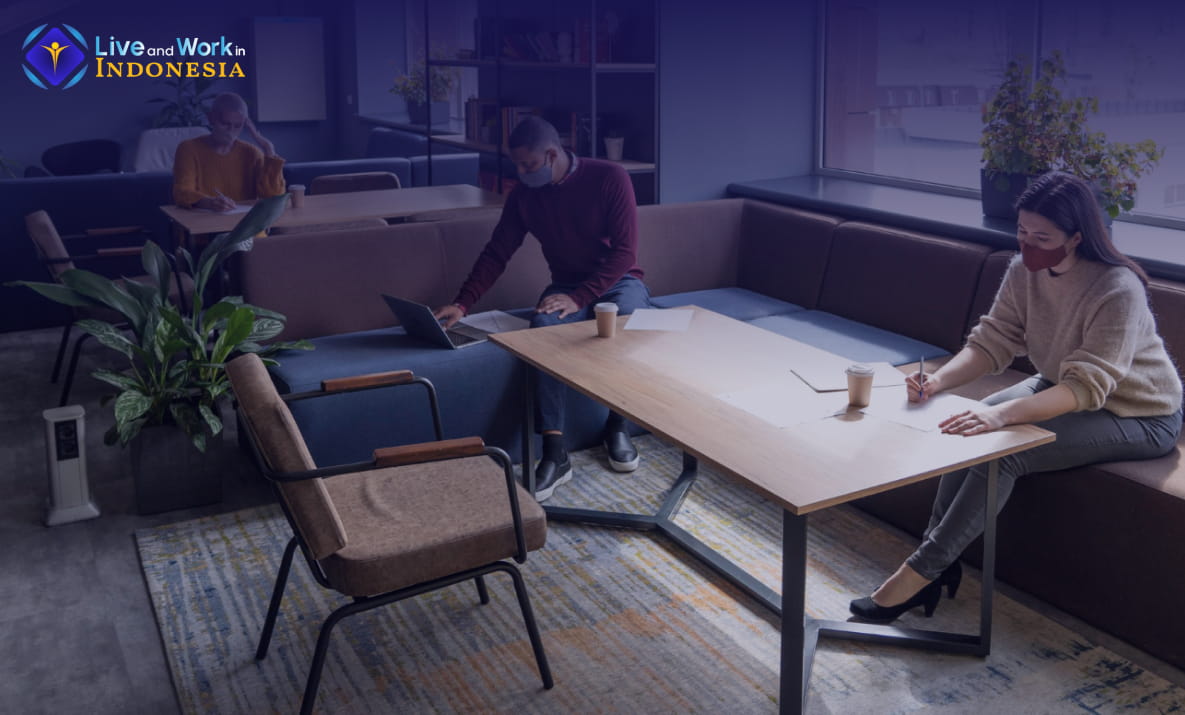
Coworking in Jakarta – Jakarta ranked #2 on Startup Genome’s “Emerging Ecosystems” study, ahead of Barcelona, Dubai, and Zurich a fact that surprises a lot of foreign founders who assumed Southeast Asia’s startup energy lived entirely in Singapore. But arriving in Jakarta with genuine business ambitions raises an immediate, practical question most founders don’t fully understand the answer to: do you actually need a coworking desk, a virtual office, or both? This guide breaks down exactly what each option provides, where the confusion usually happens, and how to structure your Jakarta presence correctly from day one.
Coworking and Virtual Office Aren’t the Same Thing — And Confusing Them Gets Expensive
This is the single most common misunderstanding foreign entrepreneurs bring to Jakarta, and it’s worth resolving before anything else. A coworking space is a physical place you go to work shared desks, meeting rooms, coffee, and a community of other professionals around you. A virtual office is a legal business address that supports your company registration, tax filings, and correspondence, without requiring you to physically sit there every day.
Many businesses genuinely need both, and treating them as interchangeable or assuming one automatically covers what the other provides creates real problems down the line. A coworking membership alone doesn’t satisfy Indonesia’s legal domicile requirements for company registration in most cases. A virtual office alone doesn’t give your team a physical place to actually work when you need one. Understanding which problem each solution solves is the first genuine step toward setting up correctly in Jakarta.
Jakarta’s Coworking Landscape: Where the Action Actually Is
Jakarta’s coworking scene has matured into a genuinely sophisticated ecosystem, concentrated across a handful of business districts that each carry their own character and price point.
SCBD and Kuningan: The Premium Business Address
Sudirman Central Business District (SCBD) and neighboring Kuningan remain Jakarta’s most prestigious coworking corridor, home to premium providers offering serviced offices, virtual offices, meeting rooms, and business concierge services in an upscale, corporate-facing environment. SCBD’s South Jakarta corridor alone reportedly hosts hundreds of available workspace listings — coworking desks, private suites, and enterprise spaces — reflecting just how dense the district’s flexible workspace market has become. This is the area to target if brand perception matters considerably to your business, particularly for client-facing meetings or investor conversations where address prestige genuinely influences first impressions.
Sudirman and Thamrin: Central, Connected, Corporate
Jakarta’s Sudirman and Thamrin corridors combine strong accessibility with comprehensive workspace services, offering serviced offices, virtual offices, meeting rooms, and business support in some of the city’s most centrally located towers. These districts work particularly well for businesses that need genuine proximity to government offices, major corporate headquarters, and Jakarta’s core transit infrastructure.
South Jakarta (Kemang, TB Simatupang): Lifestyle Meets Productivity
For founders who want their workspace to feel less corporate and more livable, South Jakarta’s Kemang and TB Simatupang districts deliver a blend of lifestyle and professional opportunity — cozy coworking environments surrounded by cafes, restaurants, and a genuinely more relaxed pace than the high-rise intensity of SCBD. This area has become a particular favorite among creative teams and tech-focused founders who value substance over flash in their day-to-day working environment.
West Jakarta: Where Budget Meets Authenticity
Districts like Cengkareng and Taman Anggrek in West Jakarta have emerged as startup-friendly enclaves, offering affordable private office options and practical amenities without the premium pricing found in the city’s more established business corridors — a genuinely useful option for early-stage founders watching their runway carefully.
What Coworking in Jakarta Actually Costs
Coworking pricing in Jakarta spans a wide range depending on district and provider tier. Entry-level day access at community-oriented spaces can start from around IDR 100,000 per day, including fiber-optic internet and pantry access, with meeting room rentals from roughly IDR 300,000 per hour for smaller groups. Premium providers in SCBD and similar prestige districts price considerably higher, with dedicated desk memberships and private suites reflecting the added address value and service level. For most foreign founders comparing options, the practical range across mid-tier Jakarta coworking spaces runs from roughly IDR 1.4 million per month for flexible desk access up to considerably more for private offices and enterprise suites in premium buildings.
What a Virtual Office in Jakarta Actually Solves
Here’s where the conversation shifts from workspace preference to genuine legal necessity. Indonesian law requires every company to maintain a registered domicile within national territory, and a properly zoned virtual office address is a legally accepted alternative to a full physical lease for this purpose supporting your NIB (Business Identification Number) application, tax registration, and ongoing correspondence, all without the overhead of committing to permanent office space you may not need day-to-day.
Why Foreign Founders Specifically Choose Virtual Office Over Physical Lease
For companies still validating the Jakarta market, testing demand before committing to permanent premises, or running remote-first teams that don’t need a daily physical presence, a virtual office solves the domicile requirement at a fraction of traditional office rental costs — commonly cited savings of 75 to 80% compared to leasing equivalent commercial space in the same business district. This matters considerably for foreign-owned PT PMA companies specifically, where minimum paid-up capital requirements already represent a meaningful upfront commitment; keeping ongoing operational overhead lean while that capital gets deployed toward actual business growth is a genuinely sound financial strategy.
What a Proper Virtual Office Package Should Include
A legitimate Jakarta virtual office arrangement should provide considerably more than just an address on paper. Look for a prestigious business address you can display on your website, contracts, and official documents to build immediate credibility; professional mail handling and forwarding, with packages received, scanned, and forwarded digitally or physically as needed; a dedicated phone answering service that represents your company professionally rather than leaving callers with no human contact; and critically genuine meeting room and coworking access for the moments you do need a physical space to host clients, investors, or team gatherings.
This last point is where the coworking-versus-virtual-office distinction actually resolves itself for most growing businesses: a well-structured virtual office package includes coworking and meeting room access precisely so you’re not forced to choose one or the other. You get the legal domicile a virtual office provides, plus the flexible physical workspace a coworking membership offers, bundled into a single, considerably more cost-effective arrangement.
A Critical Warning: Jakarta’s Virtual Office Restrictions
This is a detail that catches foreign investors off guard more than almost anything else in Jakarta’s setup process. Jakarta allows virtual offices only for specific service-based industries — trading and manufacturing businesses specifically must lease a physical office or warehouse space, and operating outside this rule risks the provincial government revoking your operational permits entirely.
In practice, this means the decision between virtual office and physical premises in Jakarta isn’t purely a cost or convenience question it’s tied directly to your company’s KBLI classification. Digital consultancies, software companies, marketing agencies, and most professional service businesses generally sit comfortably within virtual office-eligible categories. Companies whose actual operations involve importing goods, manufacturing, or physical inventory handling need to confirm their specific KBLI requirements before assuming a virtual office will satisfy their licensing needs a mismatch discovered after registration is a considerably more expensive problem to fix than confirming it upfront.
Why Jakarta Specifically Makes Sense as Your Indonesian Base
Beyond the practical workspace question, Jakarta carries structural advantages that make it the default choice for many foreign companies establishing an Indonesian presence. Local banks and state enterprises generally prefer working with Jakarta-registered corporations, a meaningful factor if your business plans involve local financing or government-adjacent contracts. Proximity to regulators matters too your legal team can handle licensing revisions and BKPM matters directly with the central office rather than routing requests through regional channels. And Jakarta’s talent pool offers genuinely easy access to highly skilled, bilingual professionals, a real advantage for companies building out a local team rather than operating purely as a foreign-directed entity.
Choosing the Right Setup for Your Business Stage
For solo founders and very early-stage teams primarily validating a business idea, a virtual office with bundled coworking access typically covers everything needed — a compliant legal address plus occasional physical workspace, without unnecessary fixed costs. For growing teams that need daily physical desk space for multiple people, a dedicated coworking membership in a district matching your brand positioning (SCBD for a premium corporate image, Kemang or TB Simatupang for a more relaxed creative environment) makes more practical sense, often paired with a separate virtual office arrangement if your team’s coworking location doesn’t satisfy your specific KBLI domicile requirements. For companies in trading or manufacturing specifically, physical premises aren’t optional regardless of team size Jakarta’s zoning rules make this a compliance requirement rather than a business preference.
For the most current KBLI classification requirements and virtual office eligibility by business sector, prospective investors should verify details directly through Indonesia’s official OSS (Online Single Submission) portal, which remains the authoritative source for licensing and domicile requirements.
Frequently Asked Questions
- Is a virtual office the same as a coworking in Jakarta?
No. A virtual office provides a legal business address for company registration and correspondence, while a coworking space is a physical location to actually work. Many businesses need both, and a well-structured virtual office package typically bundles coworking access as part of the offering. - Can any business use a virtual office in Jakarta?
Not entirely. Jakarta restricts virtual offices to specific service-based industries — trading and manufacturing businesses must lease physical office or warehouse space, or risk having their operational permits revoked. - How much can a virtual office save compared to a traditional office lease in Jakarta?
Virtual office arrangements typically save 75 to 80% compared to leasing equivalent physical commercial space in the same business district. - Which Jakarta district is best for coworking as a foreign founder?
It depends on your priorities SCBD and Kuningan offer premium prestige for client-facing businesses, while Kemang and TB Simatupang suit teams wanting a more relaxed, creative working environment at a lower cost. - Does a virtual office satisfy Indonesia’s legal requirements for company registration?
Yes, for eligible business categories. A properly zoned virtual office address is legally accepted for NIB registration and tax purposes, provided your KBLI classification permits virtual office use.
Get the Right Jakarta Workspace Setup From Live and Work Indonesia
Whether you need a compliant legal address, genuine daily workspace, or both working together seamlessly, getting this decision right from the start protects you from costly restructuring later especially given Jakarta’s specific virtual office restrictions by industry. Live and Work Indonesia’s Jakarta Virtual Office package combines a prestigious business address in SCBD, Sudirman, or Kuningan with genuine meeting room and coworking access all at a fraction of traditional office rental costs, and fully compliant for OSS registration. Contact Live and Work Indonesia today for a free consultation and set up your Jakarta presence the smart, compliant way from day one.