
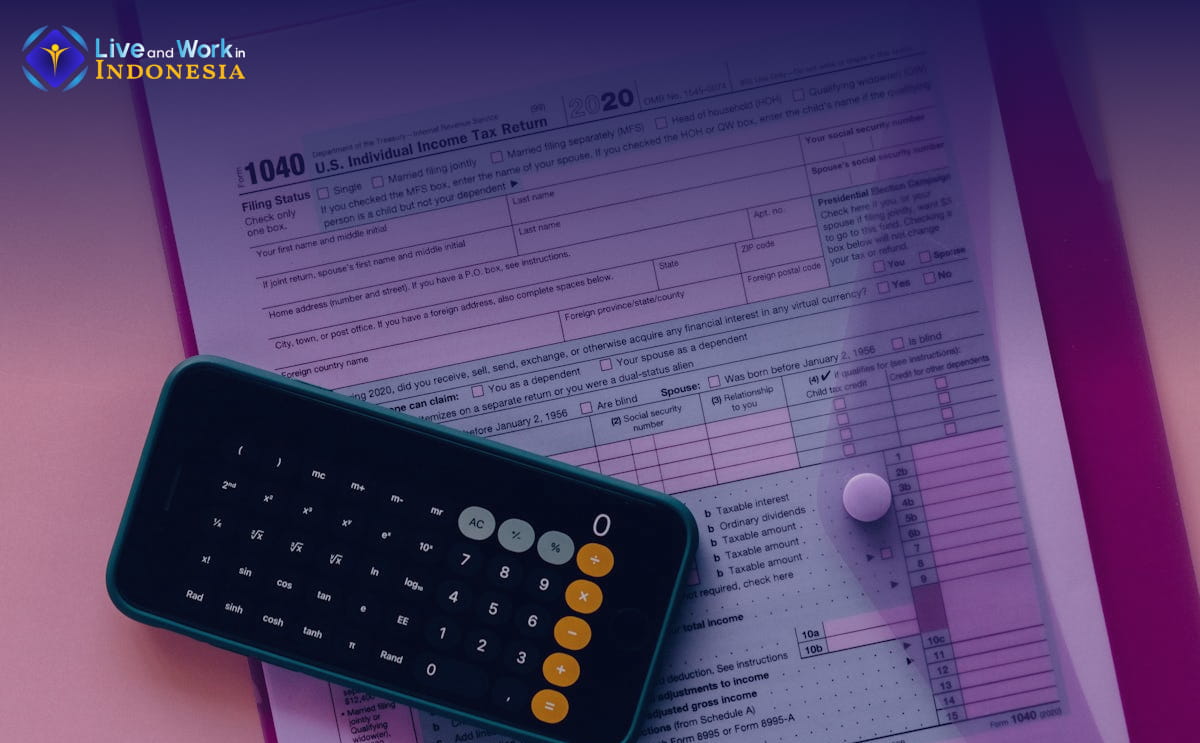
Navigating the fiscal landscape of Southeast Asia’s largest economy requires a blend of strategic foresight and meticulous compliance. For international investors and entrepreneurs who choose to Live and Work Indonesia, the year 2026 represents a pivotal era in taxation. The Indonesian government has fully transitioned to the Coretax Administration System, a digital-first tax infrastructure that integrates every facet of corporate financial life from initial incorporation to monthly reporting.
Central to this ecosystem is Indonesia VAT Registration (known locally as Pengukuhan Pengusaha Kena Pajak or PKP). In 2026, VAT is not just a tax obligation; it is a mark of a company’s maturity and its gateway to the national supply chain. For a Foreign-Owned Company (PT PMA), understanding when to register, how to navigate the new digital portals, and how to manage input-output tax is the difference between a high-growth venture and one bogged down by administrative penalties.
The 2026 VAT Landscape: Digital Sovereignty and PKP
In 2026, Value Added Tax (VAT) in Indonesia will be governed by the principles of efficiency and transparency. The standard VAT rate, as part of the long-term fiscal roadmap, is firmly established, and the threshold for mandatory registration remains a critical benchmark for all PT PMA entities.
1. The PKP Status Explained
To collect VAT from customers and claim tax credits on business purchases, a company must be inaugurated as a Taxable Person for VAT purposes (PKP). While any company can apply for this status voluntarily, it becomes a legal mandate once your annual gross turnover exceeds IDR 4.8 Billion.
2. The Power of Coretax
The 2026 Coretax Administration System has replaced the older e-Faktur desktop applications with a unified, web-based portal. This system cross-references your company’s sales data with its customs records (for importers) and its social security payments (BPJS), ensuring that Indonesia VAT Registration is consistent with all other business activities.
For a global perspective on how Indonesia’s tax reforms align with international standards, the OECD Centre for Tax Policy and Administration provides an excellent framework for understanding Value Added Tax in emerging markets.
Eligibility and The Threshold Rule for PT PMA
For many foreign-owned companies, the question isn’t just how to register, but when. In 2026, the Indonesian Tax Office (DJP) monitors company turnover with high-frequency digital audits.
- Mandatory Registration: If your PT PMA’s revenue hits the IDR 4.8 Billion mark at any point during the fiscal year, you must apply for PKP status by the end of the following month.
- Voluntary Registration: Many B2B-focused PT PMAs choose to register for VAT immediately after incorporation. This is strategic because large Indonesian corporations and government entities often refuse to work with non-PKP vendors, as they cannot claim the VAT back.
The World Bank’s Indonesia Economic Prospect highlights that the formalization of businesses through tax registration is a key driver for the country’s 2026 GDP growth targets.
Step-by-Step Indonesia VAT Registration Process 2026
The process for a PT PMA to become a VAT-registered entity is more rigorous than the standard tax ID (NPWP) application. It involves a “Know Your Taxpayer” verification.
Phase 1: Preparation of Corporate Credentials
Before accessing the Coretax portal, ensure your PT PMA has:
- A Valid NIB (Business Identification Number): Obtained through the OSS-RBA system.
- Digital Certificate (Sertifikat Elektronik): In 2026, this is a cloud-based digital signature used to authorize all tax invoices.
- Physical Domicile Proof: The DJP requires proof that your company operates from a legitimate business address (Virtual Offices are scrutinized heavily for PKP status).
Phase 2: The Digital Application
The application is filed through the unified Coretax portal. You will need to upload your latest financial statements, proof of sales (or projected sales), and the identification of the Director-in-charge (who must hold a valid NPWP/NIK).
Phase 3: The Physical Verification (The Survey)
Unlike the NPWP, which is issued instantly, PKP status usually requires a visit from a tax officer. In 2026, this “Field Survey” is often conducted via a hybrid model combining a physical site visit with a video-call interview. The officer will verify:
- The existence of the office and company signage.
- The nature of the business activities.
- The original corporate documents.
Phase 4: Approval and Activation
Once the survey is successful, the DJP issues the Surat Pengukuhan Pengusaha Kena Pajak. From this moment, your company is legally required to issue Faktur Pajak (Tax Invoices) for every taxable transaction.
Managing VAT Compliance: Monthly Obligations
Once you have completed your Indonesia VAT Registration, your PT PMA enters a cycle of monthly compliance that is strictly monitored by the Coretax system.
1. Issuing e-Faktur
Every time you sell a product or service, you must generate an electronic tax invoice. In 2026, this is done in real-time. The system validates the buyer’s NPWP/NIK instantly, preventing the “Fake Invoice” issues of previous decades.
2. Input Tax vs. Output Tax
The primary benefit of being a PKP is the ability to offset the VAT you pay on business expenses (Input Tax) against the VAT you collect from customers (Output Tax). If your Input Tax exceeds your Output Tax common in the early stages of a PT PMA you can carry forward the overpayment or apply for a refund.
3. Monthly VAT Returns (SPT Masa PPN)
VAT returns must be filed by the end of the following month. In 2026, the Coretax system “pre-populates” your return based on the invoices you have issued and received, significantly reducing the margin for manual error.
VAT on Digital Goods and Services
A critical update for 2026 involves the “PPMSE” (Electronic System Provider) regulations. If your PT PMA operates a digital platform or sells software-as-a-service (SaaS) to Indonesian consumers, you may be required to register as a “VAT Collector” even if you do not have a massive physical presence. The 2026 rules ensure that the “Destination Principle” is strictly applied, meaning VAT is due where the service is consumed.
Why “Live and Work Indonesia” is Your Tax Partner
Navigating the Indonesian tax system as a foreign investor can feel like decoding a complex puzzle. At Live and Work Indonesia, we believe that compliance should be an invisible engine that powers your growth, not a roadblock that slows you down. We specialize in the unique tax needs of PT PMA entities in the 2026 digital era.
Our Indonesia VAT Registration services include:
- PKP Readiness Audit: We review your office setup and corporate documents to ensure you will pass the DJP field survey on the first attempt.
- Coretax Implementation: We set up your company’s profile in the new system, manage your Digital Certificate activation, and train your staff on the 2026 e-Faktur workflow.
- Monthly Tax Management: From calculating Input-Output tax to filing your monthly SPT, we ensure your company remains in “Green” status with the tax office.
- VAT Refund Representation: If your PT PMA is due a refund, we manage the audit process, defending your claims and ensuring your capital returns to your balance sheet.
- Strategic Tax Planning: We help you determine the optimal time for voluntary registration to maximize your supply chain opportunities.
Frequently Asked Questions (FAQ)
1. Can a PT PMA apply for VAT registration before making any sales?
Yes. This is called “Pre-Production” registration. It is highly beneficial for companies with high initial capital expenditures (like manufacturing or tech infrastructure), as it allows you to claim back the VAT on your setup costs.
2. What happens if I fail the Tax Office field survey?
If the officer is not satisfied with the office’s physical existence or the Director’s knowledge of the business, the application will be rejected. You must address the issues (e.g., improving the office setup) before reapplying.
3. Is VAT applicable to exports?
In 2026, the VAT rate for the export of taxable goods and certain services remains 0%. However, you still must be a PKP to report these exports and to claim back the VAT on your local raw materials or operational costs.
4. What is the penalty for late VAT filing in 2026?
Late filing of a VAT return incurs an administrative fine, while late payment of the VAT due results in a monthly interest penalty based on the Ministry of Finance’s reference rate. The Coretax system applies these penalties automatically.
5. Can a Virtual Office be used for VAT registration?
While Virtual Offices are legal for company incorporation, the DJP is increasingly strict about PKP status for companies using them. To succeed in 2026, your Virtual Office provider must be a reputable firm that can accommodate tax officer visits and provide proof of a dedicated workspace.
Build a Compliant Legacy in the Archipelago
Strategic tax management is the hallmark of a successful international business. By mastering the Indonesia VAT Registration process and embracing the 2026 Coretax ecosystem, you protect your PT PMA from legal risks and position yourself as a trusted partner in the Indonesian market.
Ready to formalize your tax status? Contact the tax and legal strategists at Live and Work Indonesia today for a comprehensive PKP assessment. Let us manage the digital bureaucracy while you focus on scaling your vision.
Consult with Our VAT Experts













