
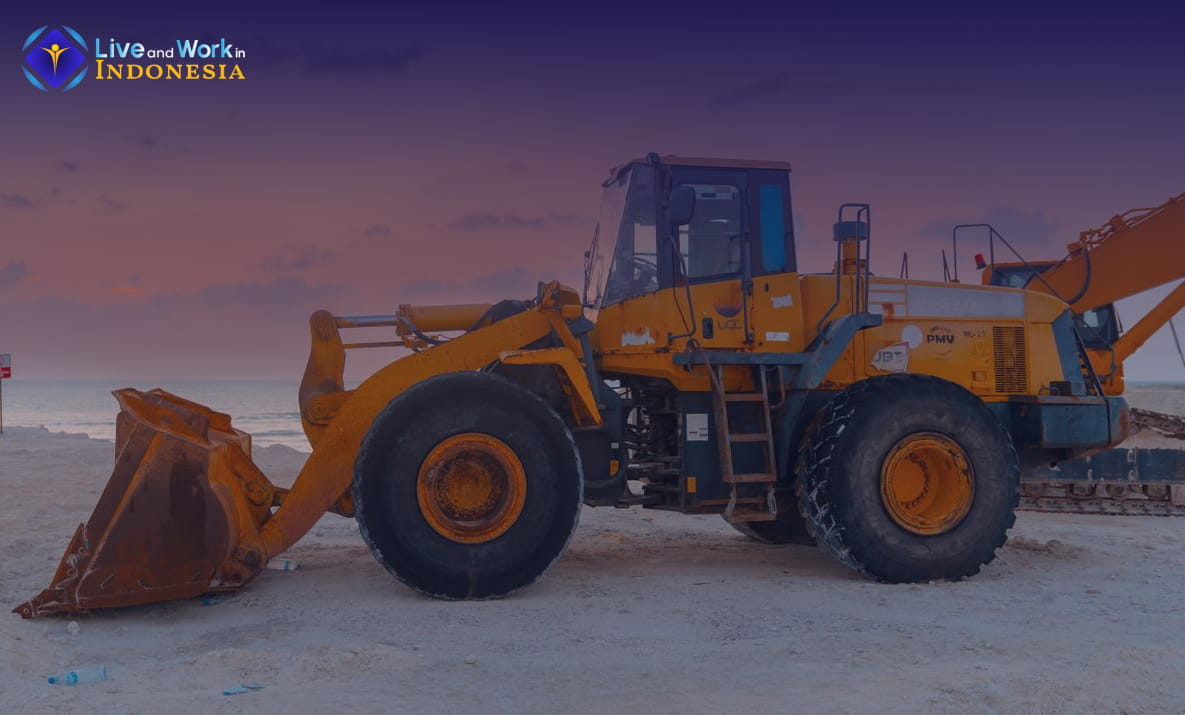
Jakarta, Indonesia — Indonesia’s heavy equipment industry has entered one of its most consequential growth cycles in a decade. With the construction equipment market valued at USD 4.8 billion in 2026 and mining equipment reaching USD 2.7 billion in the same period, the combined market now represents a formidable industrial sector shaped by three converging forces: the Nusantara new capital megaproject, a nickel mining supercycle tied to global EV battery demand, and more than 30 active downstream mineral processing projects collectively worth USD 38.5 billion that began accelerating in early 2026.
For foreign investors, contractors, and equipment distributors watching Indonesia’s trajectory, the scale of the opportunity is real. So are the regulatory pressures now reshaping how heavy equipment is procured, operated, and taxed across the archipelago.
Nusantara Is Driving the Largest Single-Site Equipment Deployment in Indonesia’s History
The development of Ibu Kota Nusantara (IKN), Indonesia’s new capital city in East Kalimantan, carries a USD 35 billion masterplan that continues to generate sustained demand for heavy construction equipment well into 2026 and beyond. Earthmoving works, road and bridge construction, utility infrastructure, and the ongoing expansion of government and residential facilities collectively require excavators, bulldozers, compactors, dump trucks, cranes, and concrete equipment at a scale that has no precedent in recent Indonesian construction history.
According to GlobeNewswire’s April 2026 Indonesia Construction Equipment Industry Report, the Indonesia Construction Equipment Market was sized at 21,694 units in 2025 and is projected to reach 31,920 units by 2031, a compound annual growth rate of 6.65% driven significantly by continued IKN construction activity. The Trans-Java toll road corridor, Trans-Papua highway segments, and sustained port and airport expansion programs under the RPJMN 2024-2029 national development plan add further procurement momentum beyond the capital city project alone.
Data center construction in Greater Jakarta is adding another layer of demand. New hyperscale facilities within the GIIC industrial estate in Bekasi, designed for AI and high-density computing workloads, require extensive earthworks and reinforced structural development during their early construction phases, a need that directly translates to short-term excavator and compactor deployment.
New Equipment Launches Signal Market Confidence in Indonesia’s Growth Trajectory
Indonesia’s heavy equipment market is not only growing in volume. It is also attracting premium new product introductions from the world’s largest manufacturers, a reliable signal of long-term market confidence.
In January 2026, SDLG, operating through PT SDLG Indonesia Machinery, introduced the E6215H Long Arm hydraulic excavator to the Indonesian market. The medium-sized unit, designed with a 15-meter arm and a 0.4 cubic meter bucket capacity, was specifically developed to support acceleration in Indonesia’s infrastructure development, where the depth and scale of earthmoving requirements on major projects demand equipment with extended reach capabilities beyond standard models.
PT Indotruck Utama’s introduction of the Volvo EC210 excavator to the Indonesian market added a premium-tier option equipped with Volvo Caretrack telematics, providing operators with real-time positioning, fuel consumption data, and machine status monitoring. The integration of remote telematics into excavators reflects a broader industry shift toward data-driven fleet management that is gaining adoption among Indonesia’s larger construction contractors and mining operators.
The most striking product debut in Indonesia’s heavy equipment sector came from PT Traktor Nusantara, the Toyota Forklifts authorized distributor, which introduced the Toyota Forklift Fuel Cell 70-8FBE18 in 2025, the first hydrogen-fueled forklift ever introduced to the Indonesian market. This launch positions Toyota at the leading edge of Indonesia’s emerging interest in zero-emission material handling equipment, anticipating the direction of future regulatory requirements in industrial zones and port facilities.
Volvo Construction Equipment’s introduction of the L120 Electric wheel loader, its largest electric machine ever offered in Indonesia, rounds out a period of electrification-focused product launches that signals how seriously global manufacturers are treating Indonesia’s regulatory and ESG evolution.
Mining Equipment Demand Is Accelerating on Two Fronts: Nickel and Coal
Indonesia’s mining equipment market, valued at USD 2.7 billion in 2026, is growing at a 6.43% CAGR through 2031, according to Mordor Intelligence’s January 2026 Indonesia Mining Equipment Market Report. Two distinct commodity cycles are driving this growth simultaneously.
Nickel has become Indonesia’s most strategically important mineral. The country holds some of the world’s largest laterite nickel deposits, concentrated in Sulawesi and the Maluku Islands. Global demand for nickel as a critical input for electric vehicle battery production has created sustained pressure for fleet expansion across open-pit laterite extraction operations. The government’s push for downstream processing, including the establishment of smelting facilities and EV battery component manufacturing, is generating an additional layer of construction equipment demand for the civil works supporting these new industrial facilities.
Vale Indonesia’s move in July 2025 to seek up to USD 1.2 billion in financing for a 2026-2027 mine and smelter expansion program is indicative of the capital commitment now flowing into Indonesian nickel infrastructure, with corresponding procurement requirements for ultra-large hydraulic excavators, rigid dump trucks, and bulk material handling equipment.
Coal continues to hold the largest share of Indonesia’s mining equipment market at 49.15% as of 2025. Despite the global energy transition narrative, Indonesian coal production remains high by historical standards, with coal mining operations in Kalimantan representing 41.98% of the country’s mining equipment market by region. Mining companies in East Kalimantan have been consolidating procurement decisions at holding-company level, reducing equipment specification variance across subsidiaries and favoring direct OEM engagement over individual distributor relationships, a shift that is compressing traditional dealer margins but driving stronger fleet standardization.
Regulatory Environment: VAT, Heavy Equipment Tax, and Emission Standards Reshape the Market
The favorable demand picture in Indonesia’s heavy equipment sector is balanced by a tightening regulatory environment that is reshaping procurement economics across all buyer categories.
The Indonesian government has implemented a 12% VAT rate affecting heavy equipment transactions, alongside a regional heavy equipment tax whose rate is set by each regional government through local regulation. The combined impact of these two tax policies has increased the effective cost of new equipment procurement and is accelerating interest in equipment rental models over outright purchase among smaller contractors and project-based buyers who cannot absorb large upfront capital outlays.
The Ministry of Environment and Forestry has intensified enforcement of emission tier standards for equipment deployed in environmentally sensitive areas. Road-building fleets serving Bina Marga state contracts are most affected, with operators now retiring pre-Tier 3 machines to maintain eligibility for government tenders. According to MarkWide Research’s May 2026 Indonesia Construction Equipment Market analysis, this regulatory pressure is accelerating engine platform refreshes among state contractors and creating demand for equipment upgrades that benefit newer machinery while creating a parallel market for the used equipment being displaced.
TKDN (Tingkat Komponen Dalam Negeri), Indonesia’s local content requirement, adds another compliance layer for foreign equipment manufacturers and distributors. Companies bidding on government-funded construction and infrastructure projects must demonstrate that their equipment meets applicable TKDN thresholds, incentivizing local assembly, spare parts sourcing from domestic suppliers, and manufacturing partnerships with Indonesian entities. This requirement is structurally favoring equipment brands that have invested in local manufacturing presence over those relying entirely on imported units.
What This Means for Foreign Investors Entering Indonesia’s Heavy Equipment Sector
The convergence of Nusantara construction momentum, nickel mining expansion, downstream industrial development, and government infrastructure spending creates a genuine and durable market opportunity for foreign investors considering Indonesia’s heavy equipment sector. The path is not without friction: tax costs have risen, emission compliance requirements are tightening, and TKDN requirements demand local content planning rather than pure import strategies.
Foreign companies looking to participate in this market, whether as equipment distributors, construction contractors, mining operators, or component manufacturers, require a legal entity structure in Indonesia that is correctly configured for the relevant sector, in compliance with Indonesia’s Positive Investment List, and prepared for the licensing requirements specific to construction and mining activities.
Establishing a properly structured PT PMA (Foreign Investment Limited Liability Company) is the legal foundation for any foreign company seeking to operate heavy equipment, win government contracts, meet TKDN compliance, and build the institutional relationships that sustained market participation in Indonesia requires.
5 Frequently Asked Questions About Heavy Equipment in Indonesia
What is driving heavy equipment demand in Indonesia in 2026? Three primary forces are driving demand. First, Nusantara new capital construction, with its USD 35 billion masterplan, continues generating large-scale procurement requirements for earthmoving and structural equipment. Second, nickel mining expansion tied to global EV battery demand is driving fleet procurement in Sulawesi and the Maluku Islands. Third, more than 30 active downstream mineral processing projects collectively worth USD 38.5 billion began accelerating in early 2026, creating new construction equipment demand for the industrial facilities supporting these programs.
What is the size of Indonesia’s heavy equipment market in 2026? The construction equipment segment is valued at USD 4.8 billion in 2026, while the mining equipment segment is valued at USD 2.7 billion, placing the combined heavy equipment market at approximately USD 7.5 billion. Both segments are growing at compound annual growth rates above 6%, with mining equipment’s autonomous and electric subsegments showing the fastest growth of all categories.
What are the main regulatory challenges for heavy equipment operators in Indonesia? Three regulatory areas currently create the most compliance pressure. The 12% VAT rate and regional heavy equipment tax increase procurement costs significantly. Emission tier enforcement by the Ministry of Environment and Forestry is requiring pre-Tier 3 equipment retirement for operators working on state-contracted projects. TKDN (local content) requirements create structural pressure for local sourcing and manufacturing partnerships rather than pure equipment importation.
Can a foreign company own and operate heavy equipment in Indonesia? Yes, through a correctly structured PT PMA with KBLI business classification codes aligned to the relevant sector, such as construction services, mining, or equipment distribution. The Positive Investment List permits foreign ownership in most heavy equipment-related sectors, though TKDN compliance and specific sector licensing requirements must be factored into the company formation and operational planning process.
Which regions in Indonesia have the highest concentration of heavy equipment activity? Kalimantan dominates heavy equipment deployment, accounting for 41.98% of the mining equipment market by region, driven by coal and nickel extraction. Java, particularly the corridor supporting the Nusantara supply chain and the Trans-Java toll road, is the largest single region for construction equipment deployment. Sulawesi is experiencing the fastest regional growth, at a projected CAGR of 9.72% through 2031, driven by nickel mining expansion.
Establish Your Legal Foundation in Indonesia’s Heavy Equipment Market
Indonesia’s heavy equipment market is growing at a pace that rewards early, correctly structured entry. Whether you are sourcing equipment for a specific project, building a distribution network, or establishing long-term mining or construction operations, the legal entity structure you establish determines your eligibility for government contracts, your TKDN compliance positioning, and your ability to operate at scale across this market.
Live and Work Indonesia supports foreign investors entering the construction, mining, and heavy equipment sectors, covering PT PMA establishment, KBLI classification for equipment and contractor businesses, construction and mining license coordination, and the full compliance framework required to operate in Indonesia’s most capital-intensive industry sectors.
Contact us today for a free consultation and set up your Indonesian heavy equipment operations on a legally sound and commercially viable foundation.













